The FAJR Prayer is TWO rak^ahs (cycles)
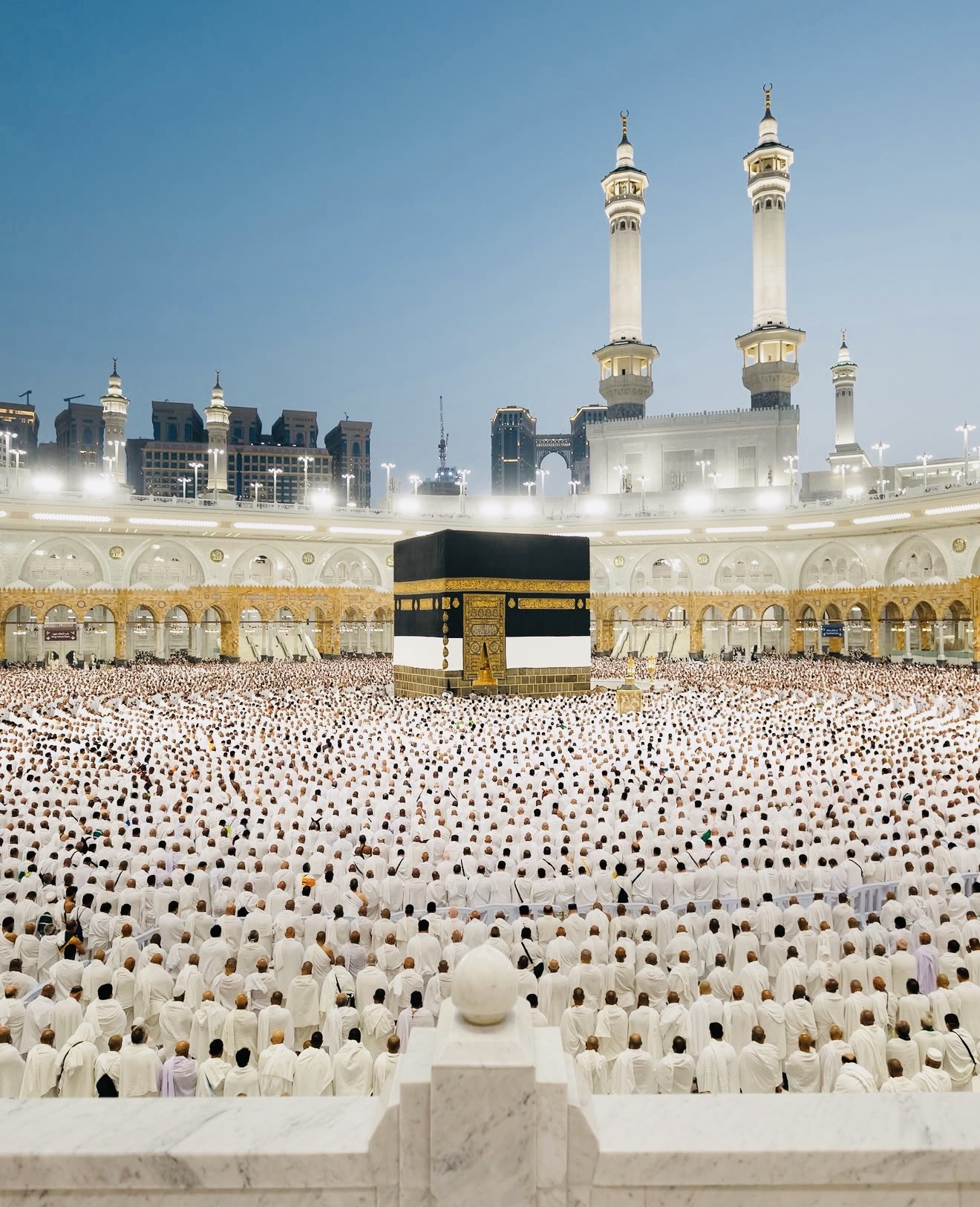
01: Facing the Qiblah
To stand directing your chest to the Qiblah. The honorable Ka^bah is your Qiblah, which means your direction in prayer.

02: Placing the Intention
- To intend in your heart performing the obligatory Fajr prayer. Do that while saying اللَّهُ أَكْبَر (Allaahu akbar). An example is to say in your heart, “I intend to pray the obligatory Fajr prayer.”
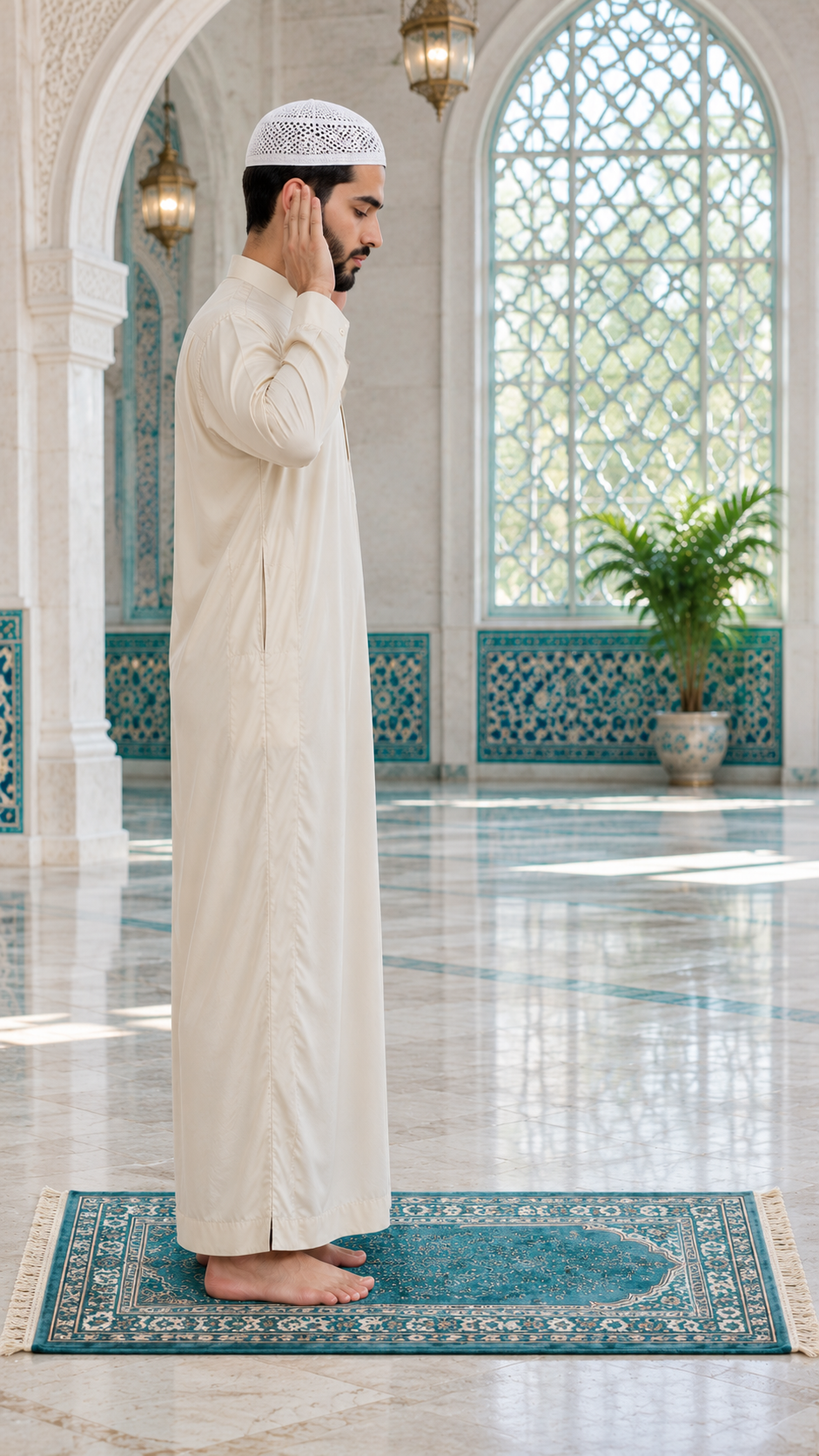
03: The Opening Takbeer
- To say اللَّهُ أَكْبَر (Allaahu akbar) at least as loud as you can hear yourself while raising your hands so that your thumb is at ear’s level when you say اللَّهُ أَكْبَر (Allaahu akbar).

04: To Stand (Qiyaam)
- To stand in the obligatory prayer when able. If unable, one prays sitting. If unable, one prays lying on one’s side. If unable, one prays lying on one’s back.
- To hold the wrist of the left hand with the right hand, placing both above the navel.
- To softly recite the Opening Supplication, then the isti^aadhah.
05: To Recite the Faatihah
- To recite the Fatihaah (the first chapter of the Qur’aan) at least as loud as you can hear yourself. It is an obligation to recite the Fatihaah properly, that is, to pronounce all the letters correctly. Learn the recitation of the Fatihaah from a qualified teacher.
- To recite a short Soorah after the Fatihaah.
-
To recite the Qur’aan in a louder manner in the two rak^ahs of the Al-Fajr prayer.


06: The Rukoo^ (Bowing)
- To perform rukoo^ by bowing until one’s palms could reach one’s knees and to remain motionless in rukoo^ for the duration of saying اللَّه سُبْحَانَ (subhanallaah) – (tuma’ninah) while having each bone settled in its place all at once.
- Upon bending to raise your hands next to your ears and say اللَّهُ أَكْبَر (Allaahu akbar).
- While in rukoo^ to say three times: سُبْحَانَ رَبِّيَ الْعَظِيمِ (subhaana Rabbiyal-^Adhem). It means: Praise be to my Great Lord.
07: The Straighten up (I^tidaal)
- To straighten one’s back and stay still in this position for the time it at least it takes to say اللَّه سُبْحَانَ (subhanallaah) – (tuma’ninah).
- While raising your trunk, to raise your hands next to your ears and to say سَمِعَ اللَّهُ لِمَنْ حَمِدَهُ (sami^allaahu liman hamidah). It means: Allaah hears who praises Him.
- While your back is straight up, to say رَبَّنَا لَكَ الْحَمْد (Rabbanaa lakal-hamd). It means: O our Lord, to You the praise is due.


08: The Sujood (Prostration)
- To go down to the floor and prostrate by pressing your bare forehead, and putting your palms, knees, and toe pads on the ground. Both feet are kept vertical with the heels up and the toe pads down touching the floor. Stay still in this position for at least the time it takes to say سُبْحَانَ اللَّه (subhaanallaah).
- While in sujood, to say three times سُبْحَانَ رَبِّيَ الْأَعْلَى (subhaana Rabbiyal-‘a^laa) – It means: Praise be to my Supreme Lord.
09: The Sitting Between the Two Sujoods
- To raise your trunk from prostration and sit, staying still in this position for at least the time it takes to say سُبْحَانَ اللَّه (subhaanallaah).
- To say اللَّهُ أَكْبَر (Allaahu akbar) while coming to sit.

10: To perform a Second Sujood from your Sitting Position
- To perform a second sujood from your sitting position. This sujood is similar to the first sujood.
- After the second sujood is fulfilled you have completed the first rak^ah (cycle) of the prayer.
11: To stand up for the second rak^ah
- To stand up for the second rak^ah and to say اللَّهُ أَكْبَر (Allaahu akbar).
Repeat steps 5 to 10. This ends your second rak^ah.

12: The Tashahhud
- To sit up, then to recite the Tashahhud.
- To say as–Salaatul-Ibraaheemiyyah.
- To say a supplication.
13: The Ending Salaam
- To say السَّلَامُ عَلَيْكُمْ وَرَحْمَةُ اللَّهِ (as-salaamu ^alaykum wa rahmatullaah) at least as loud as you can hear yourself, upon turning the head to one’s right and then upon turning it to one’s left.
By saying this, your Fajr prayer has ended.