
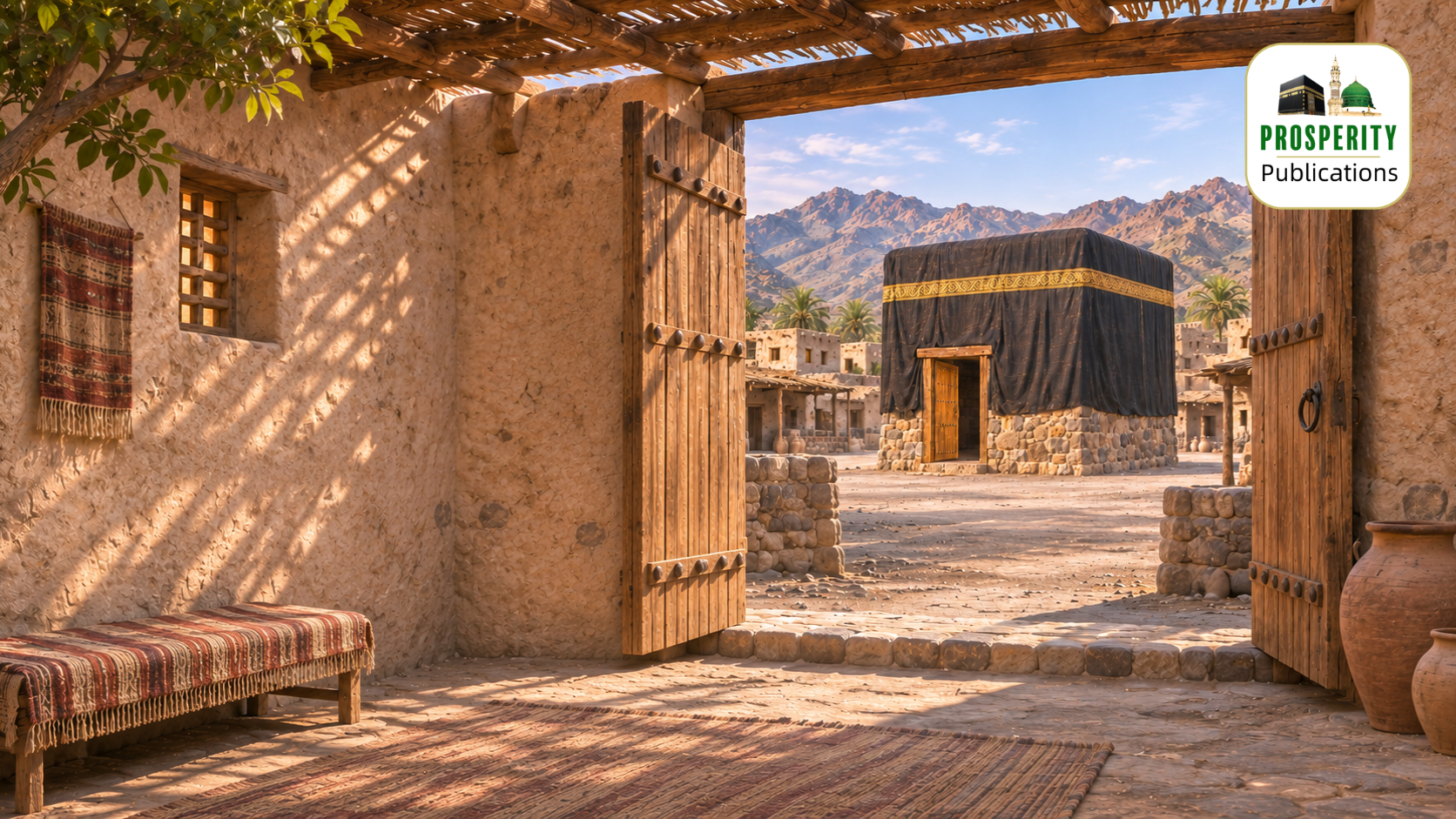
All images are for illustrative purposes only and do not depict the exact events as they occurred.

THE BIRTH OF PROPHET MUHAMMAD ﷺ
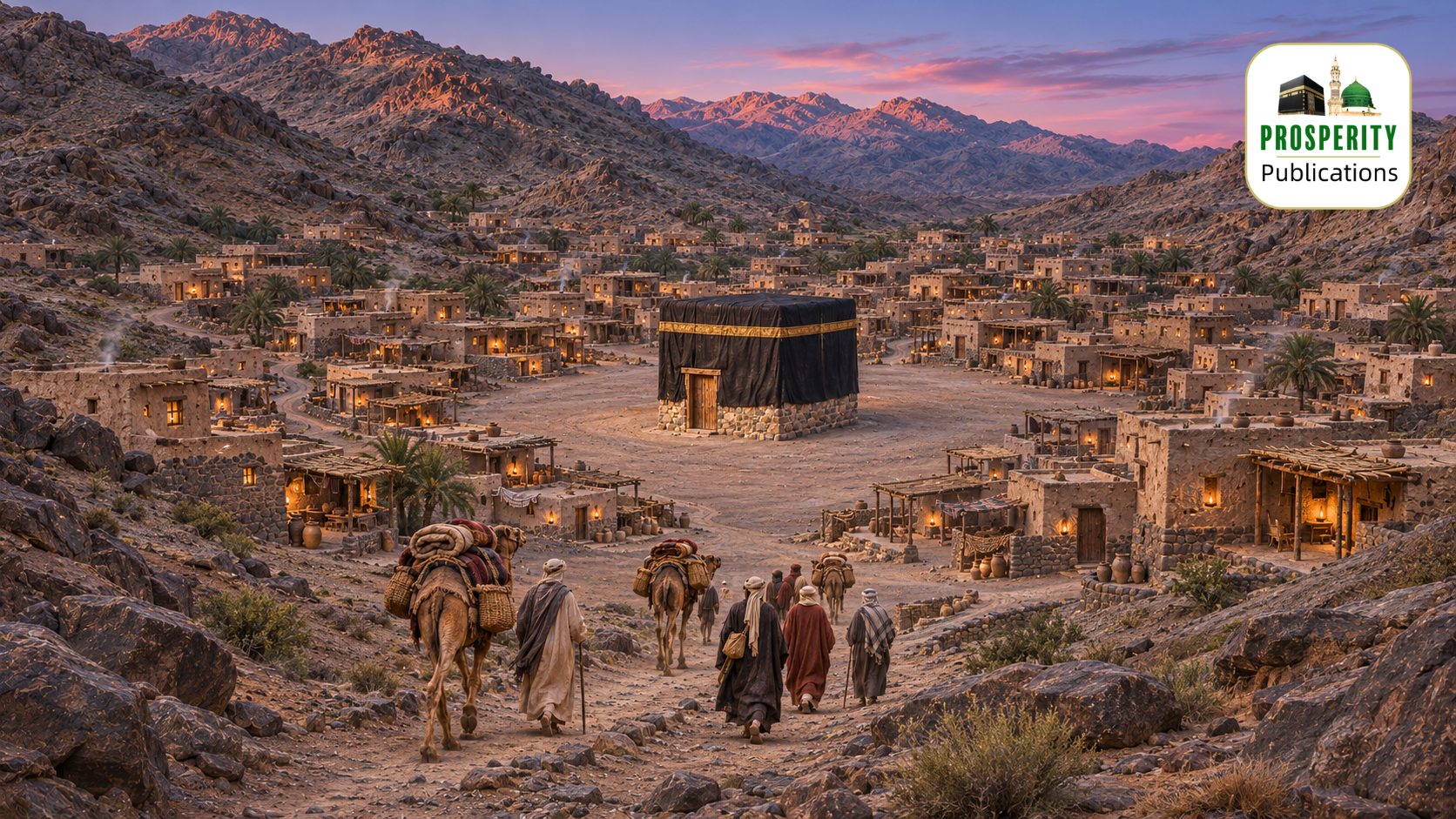
At the time when Prophet Muhammad, ﷺ, was born, the people of Makkah were in the terrible state of worshipping idols. They believed that God was only one of many gods. The people of Makkah made many statues and worshipped them unrightfully. They believed that the Ka^bah was a special structure, but they put their ugly idols around it. People used fortune-telling arrows to make decisions and sought fortune-tellers for advice.
People came from all around to visit the Ka^bah and worship the idols there. They claimed to be following their forefather, Abraham, in making Hajj (Pilgrimage). However, their ugly actions were not in any way similar to the Hajj performed by Prophet Ibraaheem (Abraham) before them. They circled the Ka^bah naked while whistling and clapping. The Makkans got wealthy from the money spent by the tribes who came to their city to worship unrightfully.
Prophet Muhammad, ﷺ, was orphaned as an infant. Some scholars say that the Prophet was two months old when his father died, and others say that Aaminah was still pregnant with the Prophet when ^Abdullaah died. ^Abdullaah left an inheritance of five camels, some goats, and a female slave called Barakah (also known as Umm Ayman).

Aaminah narrated that she did not feel the weight of her pregnancy like other women do. During her pregnancy, Aaminah saw a vision (with her feeling in a state between wakefulness and sleep). In this vision someone addressed her, “Do you know with whom you are pregnant? You are pregnant with the Master of this Nation and its Prophet.”
Aaminah had an easy delivery. Prophet Muhammad, ﷺ, was born on a Monday, on the 12th day of the 3rd Islamic month of Rabee^ul-Awwal. This was about fifty (50) days after the attack on Makkah speared by the elephants of Abrahah.
It was narrated that the Prophet’s umbilical cord was already cut when he was born. Hence, no one had to do that cutting. Also, it is said that the Prophet was born already circumcised.
Aaminah sent a message to ^Abdul-Muttalib to tell him of the birth of his grandson, and to ask him to come. ^Abdul-Muttalib came. Aaminah told him about the wonderful visions that she had while pregnant with the baby, and how easy the birth was.
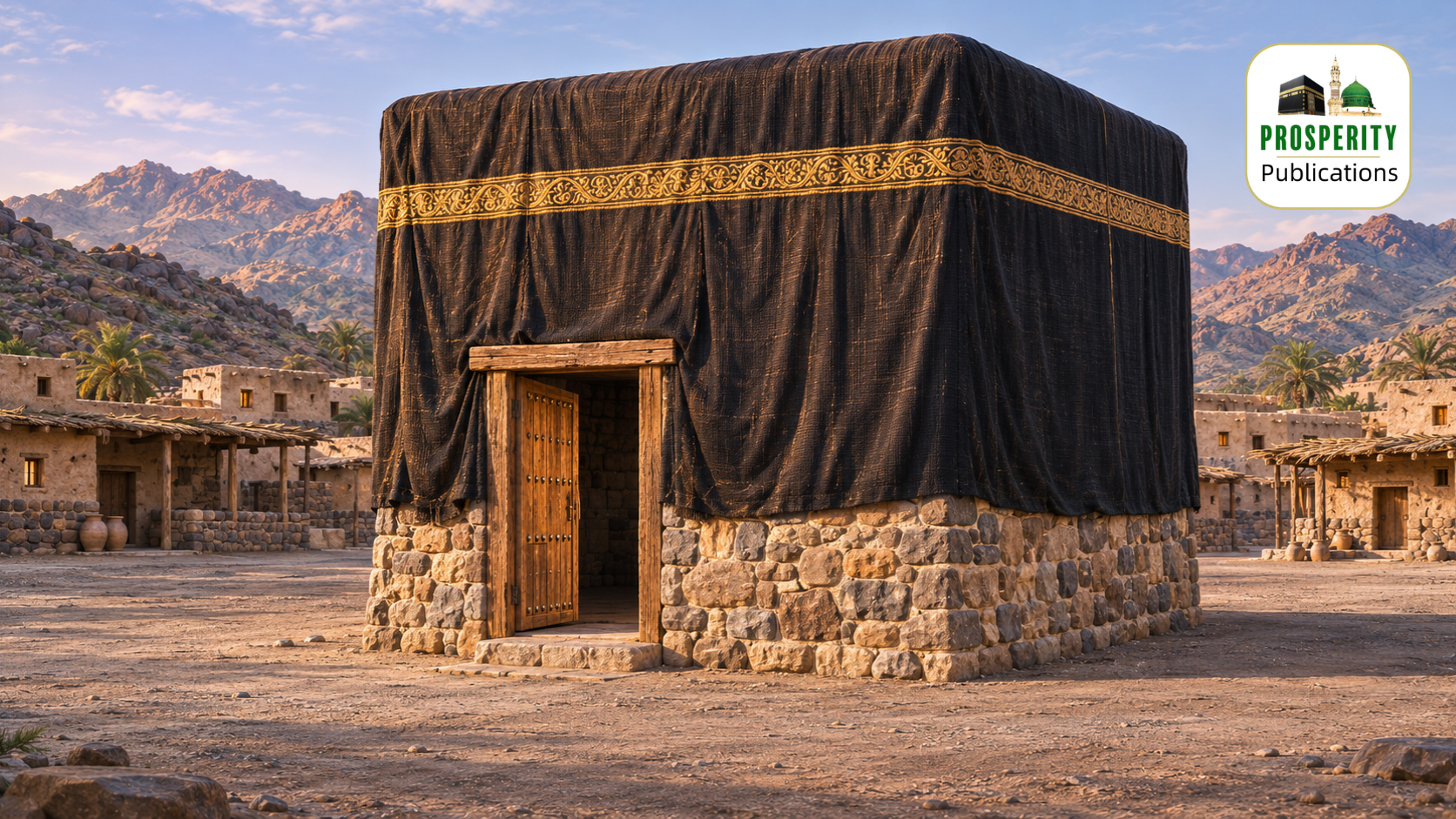
^Abdul-Muttalib was very pleased and took the blessed baby to the Ka^bah. He went inside of the Ka^bah with the baby and thanked God for the birth of this special grandson. ^Abdul-Muttalib gave the baby the name Muhammad, meaning, “the one praised by many for his numerous good attributes.”
At the time, Muhammad was not a common name amongst the Arabs. Before the naming of our prophet, only seven children had recently been named Muhammad. At that time, the Arabs were hearing that shortly a prophet would be born, named Muhammad. Those people hoped that their son would be that prophet. Yet the name Ahmad, another name of Prophet Muhammad, ﷺ, was never given to any one before our Prophet. Both names, Muhammad, ﷺ, and Ahmad, were cited in the book of Prophet Jesus,^alayhis-salaam the Injeel.
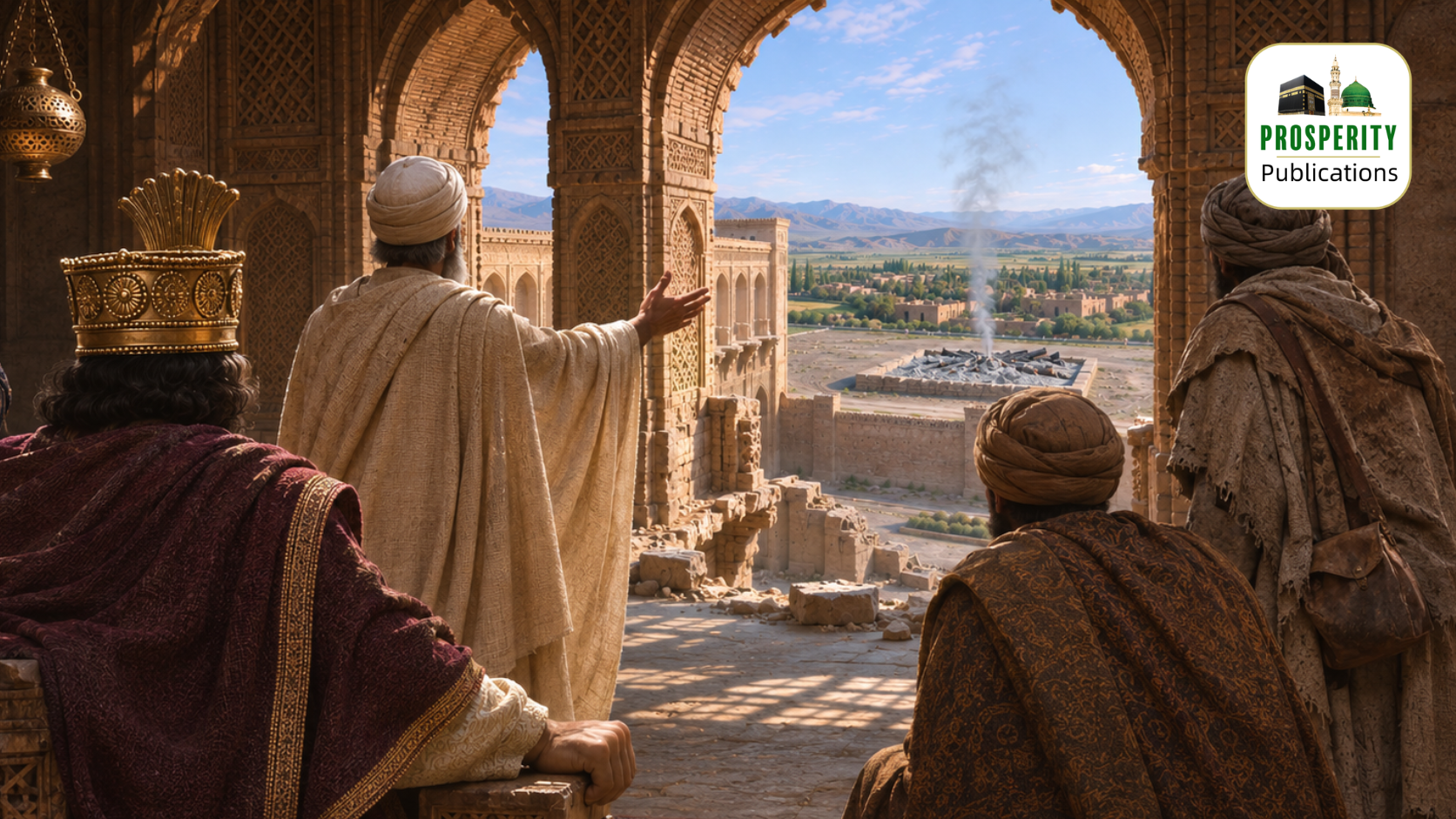
Islamic historians narrated that when the Prophet was born, fourteen balconies of the Persian king’s biggest palace fell down. Also, the fire that the Persians worshipped went out, even though it had not gone out for one thousand years.
The Persian king (Kisraa) saw a dream about which he felt very uncomfortable. He gathered his advisors and consulted with them about his dream. He told them that in his dream he saw camels guiding horses. These animals crossed the Tigris River, and from there they spread throughout his kingdom.
While Kisraa was telling his advisors this dream, they got the news that the fire they worshipped had gone out. Then Kisraa got more disturbed. His religious leader told him, “I saw the same dream this past night. I interpret it as follows: The Arabs will leave their land and take over the rulership of Persia. Those Arabs will rule our empire. This will take place after fourteen Persian kings rule, equal to the number of balconies that fell from the palace.”
Kisraa thought to himself, “It will be a long time before fourteen kings pass. I will not care about this now.” Kisraa was wrong.
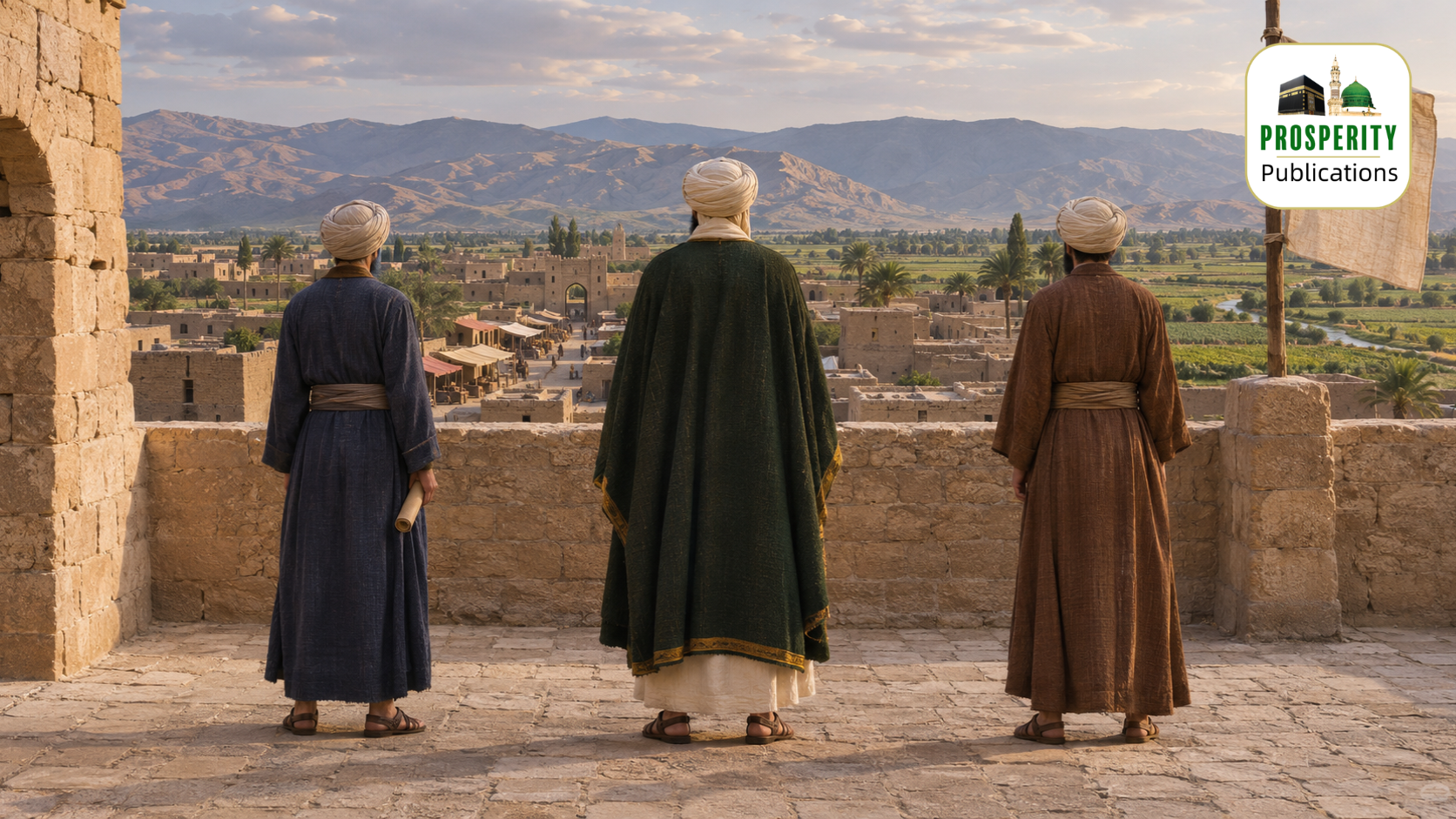
After the birth of the Prophet, ten Kisraas succeeded one another in just four years. After those four years, four more Kisraas reigned for a period of about eighty (80) years. The Persian Empire then totally fell to the Muslims, under the rulership of Caliph ^Uthmaan, about twenty (20) years after the death of Prophet Muhammad, ﷺ. Ever since then and until today, that area has been a Muslim area.
When baby Muhammad, ﷺ, was born, the news of his birth spread amongst the sons of ^Abdul-Muttalib that they had a new nephew. One of the sons of ^Abdul-Muttalib was known by the name “Aboo Lahab”. Aboo Lahab received the news of his new nephew from a slave woman he owned, named Thuwaybah. Aboo Lahab was so happy that he set Thuwaybah free that Monday¹. Later, however, when Muhammad, ﷺ, became a prophet, that same uncle became one of his worst blasphemous enemies.
¹Warning: In Al-Bukhaariyy, it is narrated that Al-^Abbaas saw in the dream that his brother Aboo Lahab told him that he was in Hellfire and the torture was reduced for him every Monday because he had set Thuwaybah free when she gave him the good news of the birth of Muhammad, ﷺ. This is a dream. Hence, it cannot be used as a basis for rules. Using this narration as if it is a fact contradicts the verses in the Qur’aan (Al-Baqarah, 162; Aal ^Imraan, 88; Faatir, 36), which state explicitly that the torture in Hellfire is never reduced for the blasphemers. Lastly, the degree of authenticity of this narration is not strong enough to qualify as a proof for a ruling.